February 02, 2026
Den Magazine
By Jihwan Jung, Editor stop@mcircle.biz
From an ENT specialist to the CEO of a digital healthcare company: A figure leading medical innovation driven by personal loss. This is the story of Voinosis CEO, Shin Jeong-eun.
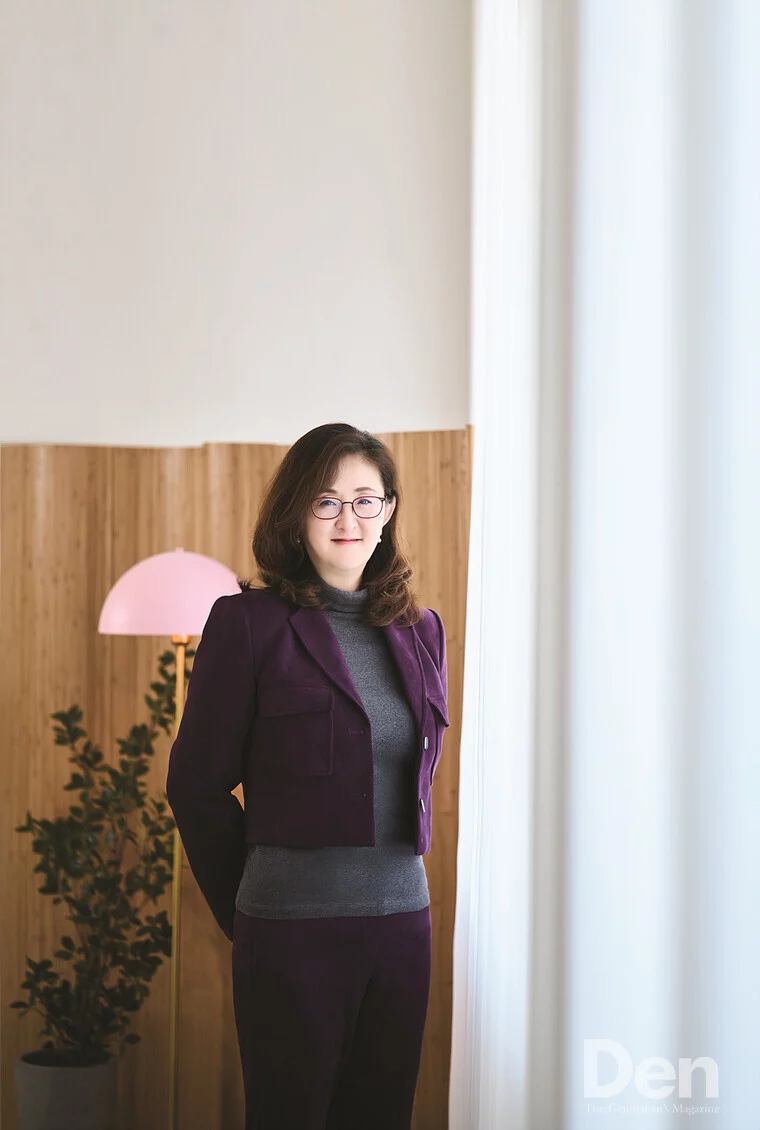
Profile: Shin Jeong-eun
A figure who, after serving as an Otorhinolaryngology (ENT) professor at Konkuk University Hospital for 22 years, suddenly took off her doctor’s coat to become a startup CEO. After losing her father to dementia, she founded the AI digital healthcare company Voinosis with a profound sense of mission: to ensure no one else has to endure the same grief she did.
Career
- CEO of Voinosis
- Full Professor, Department of Otorhinolaryngology, Konkuk University
- Head of Clinical Trial Center, Konkuk University Hospital
- Clinician, Harvard Medical School, USA
- Otorhinolaryngology Specialist, Asan Medical Center
Education
- KMBA (Master’s), Korea University Business School
- Master’s & Ph.D. in Otorhinolaryngology, Asan Medical Center
- M.D., Seoul National University College of Medicine
Great innovations are often born from personal loss. Samuel Morse, haunted by the regret of receiving the news of his wife’s passing too late, devoted himself to developing telecommunications. Louis Pasteur, the “father of microbiology,” threw himself into vaccine research after losing his children to infectious diseases. The journey of Voinosis CEO Shin Jeong-eun—stepping out of the consultation room and onto the path of an entrepreneur—shares a similar origin.
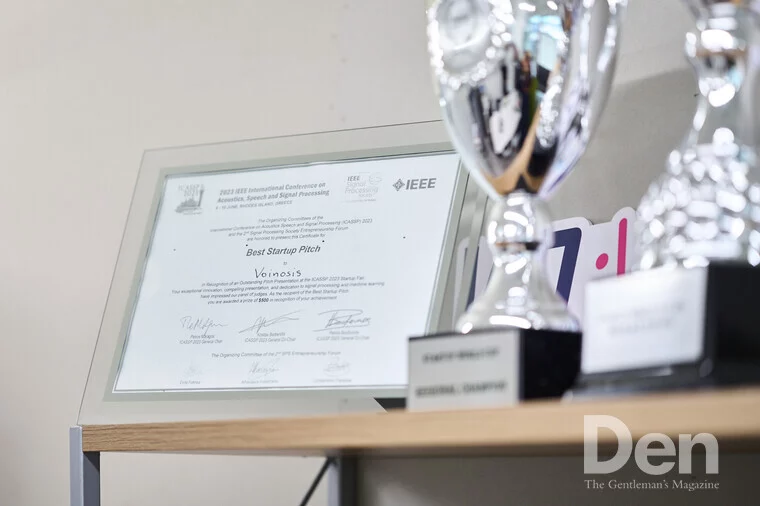
For over 20 years, CEO Shin was an ENT specialist who listened closely to her patients’ voices. She left the stable path of medicine because of a promise she made to her father, who passed away from dementia complications. The regret of not detecting her father’s symptoms earlier due to the limitations of existing medical technology drove her out of the hospital. She founded Voinosis with a resolute determination: to spare others from the regret she felt, and to detect the early signs of dementia not through a doctor’s intuition, but through hard data. Fueled by her desperation and drive, Voinosis took 1st place in the Alzheimer’s disease detection challenge at the 2023 International Conference on Acoustics, Speech, and Signal Processing (ICASSP). A daughter’s vow to never repeat her father’s pain became the starting point for a revolutionary medical technology.
Today, she speaks of moving beyond “Cure” to “Care.” She is fighting to develop technology that monitors brain health and reverses biological age simply by analyzing everyday voices, without the need for daunting medical exams. We sat down with CEO Shin Jeong-eun—who transitioned from a doctor to an entrepreneur to save lives through voice—to hear her story.
Interview
You cared for tens of thousands of patients as a university hospital ENT professor for 22 years.
“As a child, I learned music under my mother. I was preparing to major in the violin, but around elementary school, I suddenly hated practicing so much that I ran away to the library. I realized studying suited me much better than practicing an instrument, and I immersed myself in it so much that it became a hobby. That’s how I ended up in medical school instead of a music college.
During my pre-med classes, I heard a case study about a patient in her 60s who underwent cochlear implant surgery. Seeing her cry after hearing her daughter’s voice for the first time in 20 years inspired me to specialize in Otorhinolaryngology. From that moment, my medical philosophy became ‘giving sound back to those who have lost it.’ I tried to help patients regain their hearing not just by prescribing hearing aids, but through continuous rehabilitation and care.”
I understand an anecdote about your father motivated you to found Voinosis.
“My father passed away from complications of dementia. After he retired, his speech gradually became slurred, and his behavior felt uncharacteristic. Just in case, I personally took him to the hospital for a dementia screening test. He got a perfect score, so we put our worries to rest. But shortly after, he was diagnosed with dementia. It turned out that after we booked the appointment, he had looked up the test details and studied for it in advance. By the time we realized this, his illness had already progressed significantly. I cared for him myself for over four years after his diagnosis, and it was an incredibly difficult time for both of us.
Highly educated individuals often refuse to admit they have dementia. The more an elder has built up over their lifetime, the higher their pride. After he passed, I found a small notebook where he had recorded what he did every single hour. He knew something was wrong with his health, but he just didn’t want to accept it.”
As both a daughter who watched him closely and a medical specialist, the heartbreak must have been immense.
“It was. My father and I were incredibly close. I think it was partly because I was his first and only daughter. We shared similar personalities, tastes, and even looks. That’s why the moment I lost him felt so agonizing—not just the moment he passed, but from the moment the dementia took hold. Anyone who has cared for a family member with dementia will understand. From the onset of the disease, he was no longer the father I knew. The process of slowly losing my father as his soul faded away was agonizingly painful.”
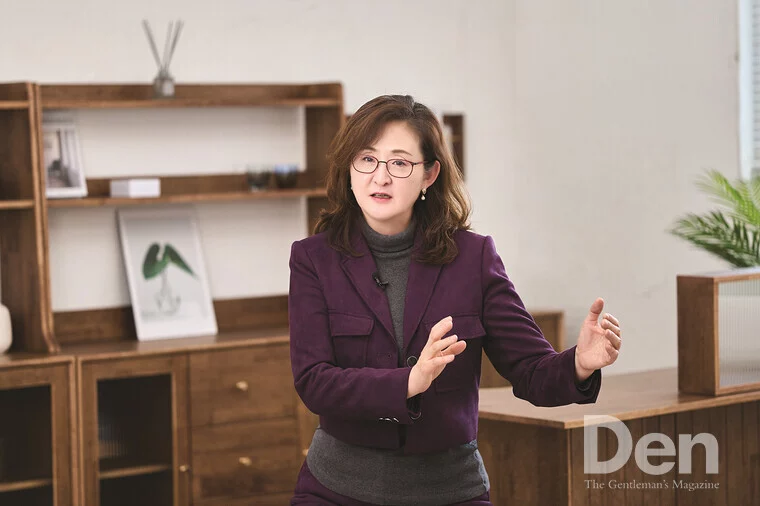
“Prevention, not a cure, is the best approach to dementia. Hearing tests can detect abnormal signs earlier than standard dementia screenings. I founded Voinosis so that no one else has to experience the pain I went through.”
What is the core value you want to deliver through Voinosis?
“That you must protect your health while you are still healthy. There aren’t many diseases in the world that can be completely cured; most are chronic conditions you manage for life. This means that if you manage it well day-to-day, you can live just as well as a completely healthy person.
However, continuous health management requires three things. First is ‘nagging’ (reminders). Everyone knows that exercising until you sweat for 30 minutes, three times a week, prevents lifestyle diseases. Yet, almost no one does it. I see chronic patients quarterly, but if I tell them to come back in a year, they return with months’ worth of leftover medication. People only pay attention to their health when they are constantly reminded in short intervals.
Next is education. Many people overlook the importance of health management, thinking, ‘Others might get sick, but not me.’ Whenever I meet such patients, I give them stern advice: ‘Everyone dies. It’s just a matter of what breaks down first and when.’ Our organs might seem separate, but they are all connected to form one body. You have to look at the whole body, not just one part.
Finally, continuous care. As people age, they become like children again. No one can overcome illness alone. In the past, large extended families lived together and children supported their parents, but expecting that culture today is unrealistic. It’s best if family can provide care, but for those who can’t, they need someone to manage their health on behalf of their family. Voinosis aims to be the platform that delivers this ‘continuous, caring nagging.'”
The goal of “continuous nagging” is a very interesting concept.
“To achieve this, we developed the ‘Voice Check’ app. When a user records a short voice clip daily, it analyzes and displays their brain health index. If the results classify them as a high-risk group, it sends an alert to a pre-registered guardian. You can think of it as an app taking over the daily reminders that family members usually give. In the short term, our goal is a daily health screening service that bridges the gap between hospital visits. Ultimately, we aim for a ‘seamless monitoring service’ that naturally checks your health whenever you speak in your daily life, without even needing to consciously record anything.
Using voice for brain exams might sound unfamiliar. MRI or CT scans are tools that look at structural changes in the body. Therefore, they can only detect an issue when there is already a structural change in the brain—like cellular atrophy or bleeding. By the time an anomaly shows up on an MRI or CT, the brain disease has already progressed significantly.
Voice, on the other hand, is the area where functional changes in the body appear first. From the brain’s perspective, speaking is a highly complex activity. You must push air from the lungs, coordinate over 100 muscles to enable fine vocalization, select words, and consider grammar before you can articulate language. This process is orchestrated by cranial nerves like the vagus nerve, as well as the frontal and temporal lobes. When brain function declines, muscle control is the first thing to subtly misalign. To the human ear, it might sound the same, but precise analysis can detect signals like micro-tremors, irregular speech speed, and pitch variations. Because of this, we can catch abnormal signals through the voice long before massive structural damage occurs in the brain.
Another advantage of voice is that it reflects your daily condition. You can effortlessly monitor your health every day—whether you slept well, if your digestion is fine, or if there are any other physical anomalies.”
Please explain Voinosis’s core technology.
“Just as everyone has a unique fingerprint, voices have distinct characteristics. We simply call this ‘Voice DNA.’ Voinosis’s technology tracks health changes based on an individual’s unique Voice DNA baseline—whether they speak slowly, have a high pitch, etc. The AI first grasps these personal voice traits. The key is detecting change. If a micro-tremor is suddenly detected or the speed of speech changes, that becomes a ‘Voice Biomarker’ to confirm the likelihood of illness. A voice biomarker is a biological indicator extracted from voice signals to early-diagnose signs of physical or mental illness.
What sets us apart from other AI healthcare companies is the active involvement of medical specialists. Some healthcare companies focus solely on gathering massive amounts of data. By using noisy data scraped from platforms like YouTube, they lack medical grounding and are vulnerable to background noise. At Voinosis, starting with myself as an ENT specialist, we filter data based on professional medical knowledge. We train our technology on clinically verified medical data from hospitals and, moving beyond simple waveform analysis, we analyze over 80 medically significant acoustic features. That is why our accuracy remains high even in noisy environments.
With this technology, we have developed engines not just for dementia screening, but also for blood alcohol concentration (DUI) and stress levels. Our DUI engine has over 90% accuracy. When alcohol enters the body, cerebellar function slows down and the tongue slurs; we analyzed the correlation between blood alcohol levels and voice changes. Stress and depression work similarly—cortisol levels alter your voice pitch. We can check health status across various fields using nothing but the voice.”
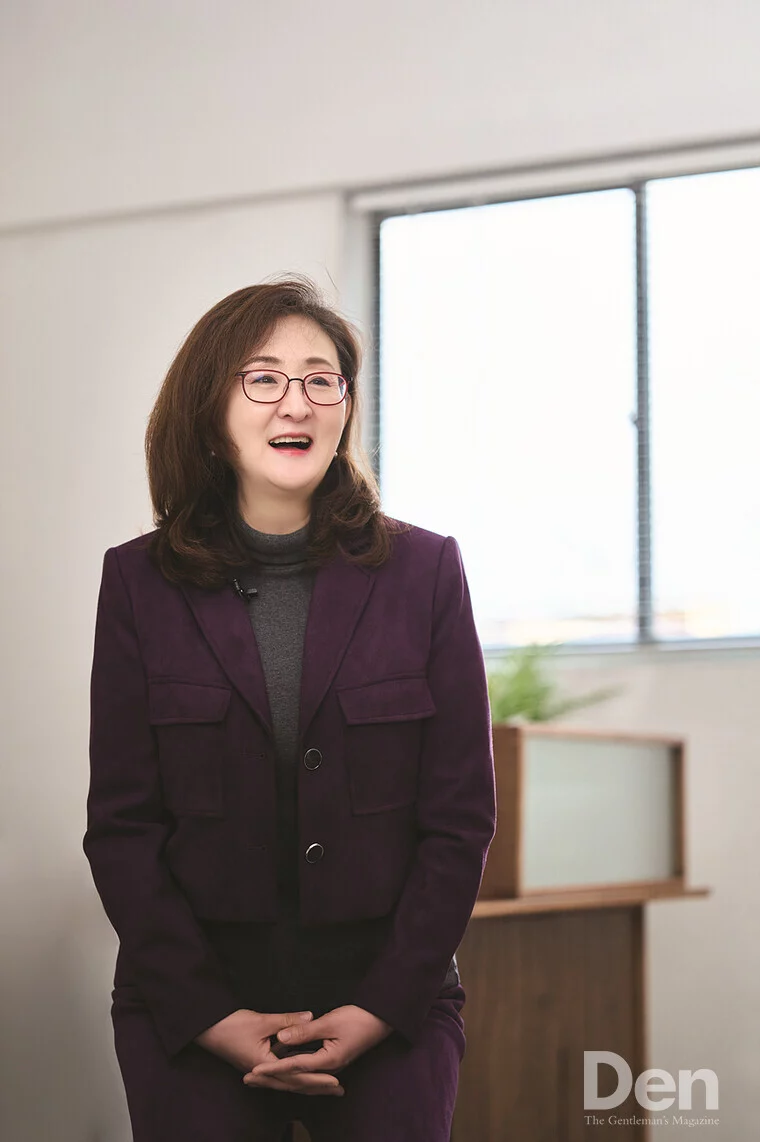
“Everyone has their own unique ‘Voice DNA.’ By understanding the consistency of a voice, we can detect the abnormal signals of a disease in advance. It’s about monitoring your health just by speaking every day.”
You left the stable foundation of life as a doctor to choose the uncertain future of a startup. Were you ever afraid?
“I never thought of it as changing careers; I’m simply doing the work I used to do in the clinic and the operating room, but at a company. I realized something after seeing patients for over 20 years: patients developing cognitive impairment experience changes in their voices first. The tone, speed, and nuance of their voice change. I don’t know if it’s because I studied music as a child or because of my ENT medical knowledge, but I have a sensitive ear for pitch and could clearly catch those differences. Because of this, for over a decade, I recommended neurology consults whenever I saw early signs of cognitive impairment in my hearing aid patients.
However, this was just a measure decided by my ‘doctor’s intuition’; I couldn’t diagnose them with objective data and metrics. I wanted to prove the sound differences I was hearing with scientific evidence, and I believed that with today’s advanced AI technology, it would be possible.
I also wanted to overcome physical limitations. Medical treatment requires a doctor to see a patient face-to-face. There is a set number of patients I can see in a day, and we have to be in the same room. No matter how hard I work as a doctor, the number of patients I can meet in the OR is limited. But if I develop a technology, I can help countless people, and I can help healthy people before they get sick. It’s a paradigm shift from treatment to prevention. I wanted to lead that change myself and help as many people as possible.”
What is the future direction for Voinosis?
“We want to become the backbone of lifestyle healthcare. Currently, we are collaborating with Daewoong Pharmaceutical on a senior residence project called ‘Hanam Care Hub.’ Intervening before dementia strikes, at the Mild Cognitive Impairment (MCI) stage, is key. Once dementia develops, it’s hard to reverse, but in the preceding stages, it is entirely manageable. Instead of staying long-term like in a nursing home, residents stay for 2 weeks to 3 months to receive cognitive training, exercise, and diet management before returning to their daily lives.
Voinosis screens for the possibility of cognitive impairment from the asymptomatic stage, and if risk signals are detected, we connect them to customized programs. I don’t want this to be an irresponsible technology that just stops at diagnosis. I want to create a healthcare ecosystem that flows from discovery to solution—where you monitor yourself at home with an app and, if necessary, receive care at an offline center.”
So you are moving beyond simple diagnosis into the realm of caring for one’s entire healthy life.
“Exactly. We are looking beyond just ‘aging slowly’ into the realm of ‘Age Reset.’ We’ve moved past the 100-year lifespan era and are now talking about the 120-year era. Thanks to advancing medical technology, there are so many ways to live longer. Now, the question isn’t ‘how to live long,’ but ‘how well we will live.’
You can’t change your chronological age on your ID, but your biological age is different. With continuous management, someone in their 60s can have the biological rhythm of a 40-year-old. The same goes for the 30s and 40s demographic, who overwork their brains while working the hardest. That is why Voinosis doesn’t solely target the elderly.”
Do you have any comforting words for middle-aged children who are worried about their parents’ brain health?
“When I founded Voinosis, I vowed to create a world without dementia. This is a personal goal and a promise to my father. Watching a beloved family member lose themselves, and having to stand by and watch their end, is truly heartbreaking. I cannot let others suffer the same pain I did. I have no intention of stopping until we create a dementia-free world. I hope Voinosis can serve as a tool of filial piety for middle-aged children worrying about their parents’ health. I believe that is my calling, both as a doctor and as the CEO of Voinosis.”
original article : A Promise to Her Father: Opening the Door to a Dementia-Free World [Interview]